 Back to List
It is named for Olof Rudbeck, father (1630–1702) and son (1660–1740). Olof Rudbeck the Elder was professor of medicine at Uppsala University, and established a botanic garden there. He was the discoverer of the human lymphatic system. His son succeeded his father as professor of medicine, and one of his students was Carl Linnaeus (1707–88) who named the genus Rudbeckia after him and his father.
Oakeley, Dr. Henry. (2012). Doctors in the Medicinal Garden. Plants named after physicians. Royal College of Physicians. Link
It is a plant which is poisonous to cattle, sheep and pigs with no medicinal uses. Austin (1974) discusses R. hirta, also regarded as a toxic plant. It was used externally by the Cherokee to bathe sores and snakebites and made into a tea for treating diarrhoea; the Seminoles used it for headaches and fever and the Miccosukee for sunstroke and headache. The Cherokee and the Iroquois used it to treat intestinal worms.
Oakeley, Dr. Henry F. (2013). Wellcome Library notes. Link
It is named for Olof Rudbeck, father (1630–1702) and son (1660–1740). Olof Rudbeck the Elder was professor of medicine at Uppsala University, and established a botanic garden there. He was the discoverer of the human lymphatic system. His son succeeded his father as professor of medicine, and one of his students was Carl Linnaeus (1707–88) who named the genus Rudbeckia after him and his father. William Sullivant was a specialist in mosses
Oakeley, Dr. Henry. (2012). Doctors in the Medicinal Garden. Plants named after physicians. Royal College of Physicians. Link
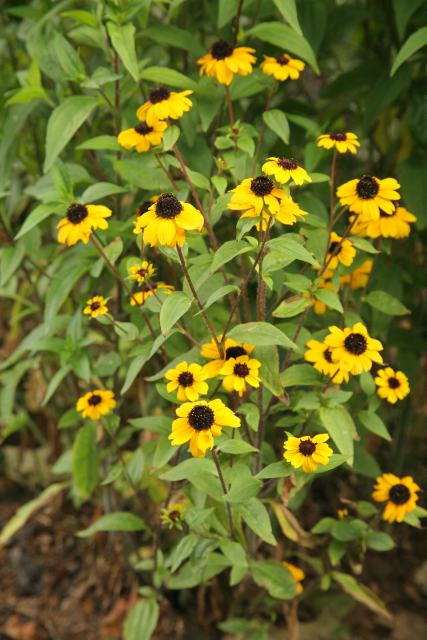
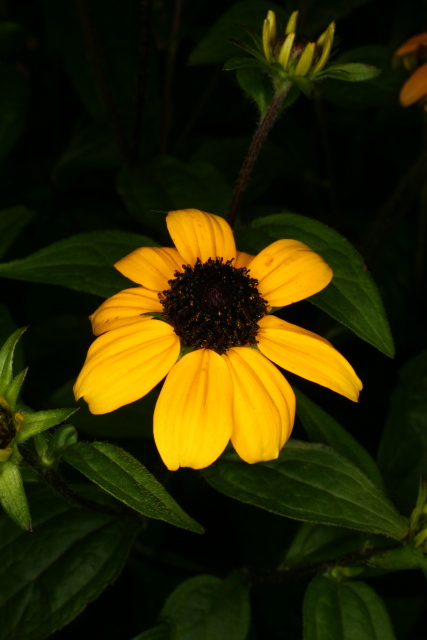
This plant from the Asteraceae family is native to the grasslands of Canada. In the Medicinal Garden it is grown amongst grasses and other American prairie plants, where it bears a profusion of golden, shuttlecock-like fl owers on stiff stems in late summer. With a yearly mulch of deep well-rotted, horse manure, it is tolerant of partial shade and drought, and is disease-resistant. It can be easily propagated by seed and new plants will often flower in their first year. (Clare Beacham)
Oakeley, Dr. Henry. (2012). Doctors in the Medicinal Garden. Plants named after physicians. Royal College of Physicians. Link
These notes refer to the use of the related species R. hirta in traditional Native American medicine: Austin (1974) discusses R. hirta, also regarded as a toxic plant. It was used externally by the Cherokee to bathe sores and snakebites and made into a tea for treating diarrhoea; the Seminoles used it for headaches and fever and the Miccosukee for sunstroke and headache. The Cherokee and the Iroquois used it to treat intestinal worms.
Oakeley, Dr. Henry F. (2013). Wellcome Library notes. Link
Northern America, North-Central U.S.A.
Northern America, Northeastern U.S.A.
Northern America, Southeastern U.S.A.
.JPG)