 Back to List
Other common names = BLESSED MARY'S THISTLE;BLESSED THISTLE;HOLY THISTLE;LADY'S MILK;LADY'S THISTLE;LEAVES OF MARY;MARY'S THISTLE;OUR LADY'S MILK THISTLE;OUR LADY'S THISTLE;ST MARY'S THISTLE
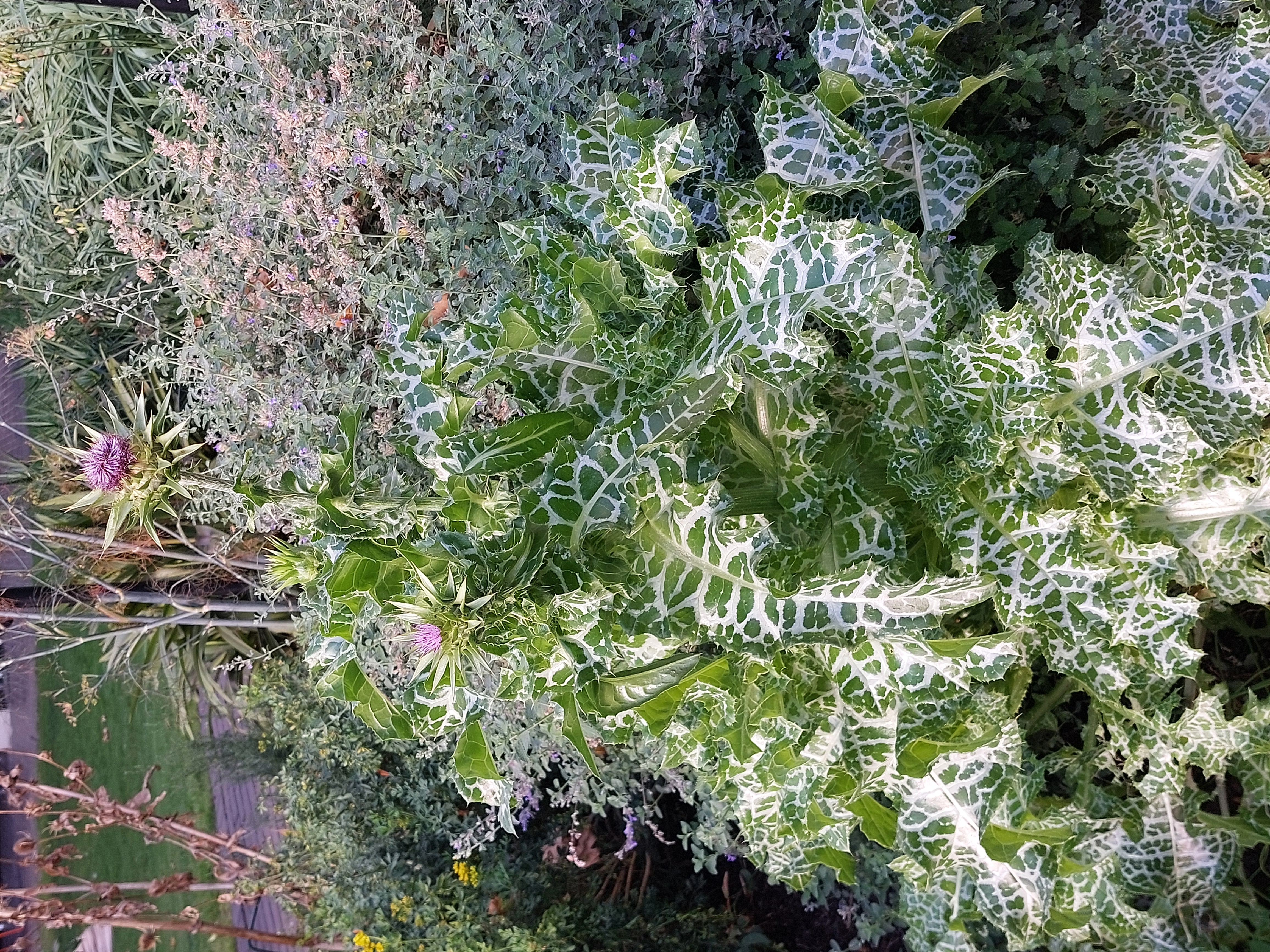
Silybum marianum (L.) Gaertn. Asteraceae Milk thistle. Carduus Mariae. Gerard (1633) calls it Carduus Mariae, Carduus Lectus, or Ladies Thistle, and Carduus leucographus [meaning 'white writing', in reference to the white markings on the leaves] because Pliny wrote about a plant he called Leucographis although Gerard notes that it would be 'hard to assume this to be the same [plant].' He also queries if it is the same as the Alba spina of Galen
Oakeley, Dr. Henry F. (2013). Wellcome Library notes. Link
Silybum marianum (L.) Gaertn. Asteraceae Milk thistle. Carduus Mariae. Distribution: Europe. Gerard (1633) calls it Carduus Mariae, Carduus Lectus, or Ladies Thistle, and Carduus leucographus [meaning 'white writing', in reference to the white markings on the leaves] because Pliny wrote about a plant he called Leucographis although Gerard notes that it would be 'hard to assume this to be the same [plant].' He also queries if it is the same as the Alba spina of Galen. Of the latter he reports that Galen recommended it for all manner of bleeding, toothache and the seeds for cramp. Gerard writes that Dioscorides recommends that a drink of the seeds helps infants whose sinews are 'drawne together'; as an antidote to snakebite and, worn round the neck, to keep snakes away. However Dioscorides (as translated by John Goodyear in 1655 (Gunther, 1959)) writes that the new leaves are eaten soaked in oil and salt, and the roots, drunk with Melicrate [honey and wine] make one vomit. It is clear that there is no good link of the plant named Silybum mariae with the plants of ancient Greece and Rome. The fruit is licensed for use in Traditional Herbal Medicines in the UK to 'relieve the symptoms associated with occasional over indulgence of drink and food such as indigestion and upset stomach' based on traditional use only (UK Medicines and Healthcare Products Regulatory Agency (MHRA)).
Oakeley, Dr. Henry F. (2013). Wellcome Library notes. Link
Indication: indigestion/overindulgence, as licensed under the UK Traditional Herbal Remedies legislation.
Medicines and Health Care Regulatory Authority, 2013 Licensed Traditional Herbal Remedies
POM – GM plants to make insulin
Traditional Herbal Medicine Registration (THMR).
Side effects/precautions: Hypersensitivity; caution with liver disease; may cause gastrointestinal reactions, headache, allergic reactions. From Patient information leaflet for preparations licensed as Traditional Herbal remedies in the UK.
Medicines and Health Care Regulatory Authority, 2013 Licensed Traditional Herbal Remedies
Africa, Macaronesia, Canary Is.
Africa, Northern Africa
Asia-Temperate, Caucasus
Asia-Temperate, Russian Far East
Asia-Temperate, Siberia
Asia-Temperate, Western Asia
Asia-Tropical, Indian Subcontinent, India
Asia-Tropical, Indian Subcontinent, Pakistan
Europe, Southeastern Europe
Europe, Southwestern Europe