
 Back to List
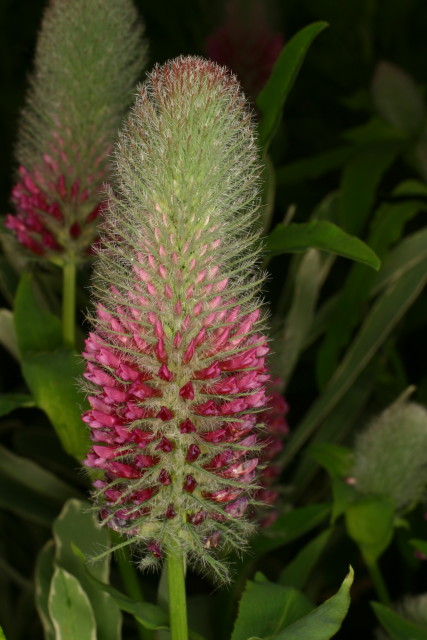
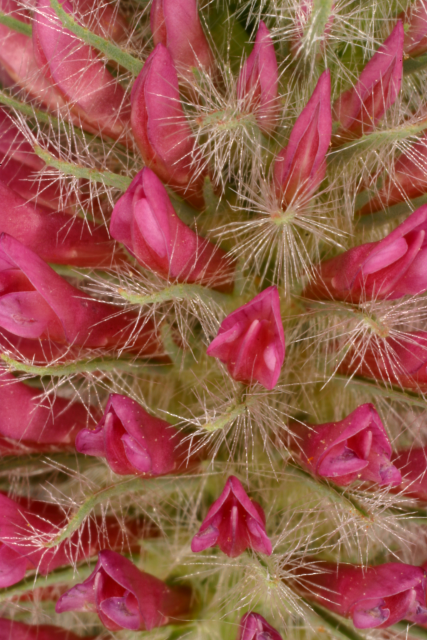
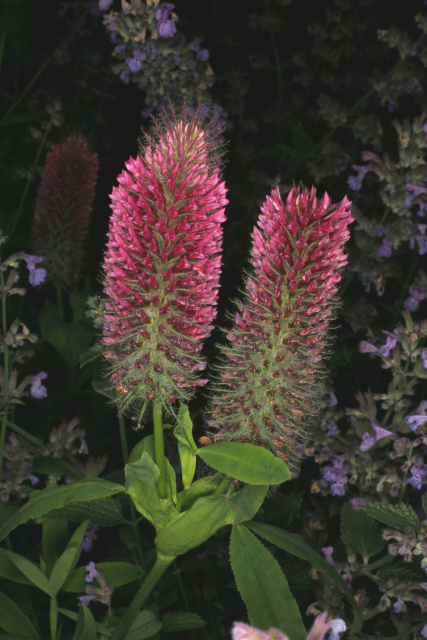
Trifolium rubens L. Leguminosae. [Note the Family Leguminosae is preferred over Family Fabaceae as the former allows all the legumes to be in one Family and not three - one Family being the current consensus among botanists]. Red Feather Clover. Distribution: Europe. The white clover, Trifolium repens, is listed as a treatment for arthritis by Linnaeus (1782). This and Trifolium pratense, Red Clover, are the ones most used for pastures. All the clovers have root nodules which fix nitrogen from the air into the soil so have an important role in ensuring soil fertility. Trifolium rubens has the same nitrogen fixing ability, and is used as an ornamental garden plant where it still acts to improve fertility.
Oakeley, Dr. Henry F. (2013). Wellcome Library notes. Link
Trifolium pratense Medicinal uses Uses supported by clinical data None. Uses described in pharmacopoeias and well established documents Although numerous clinical trials have assessed the safety and efficacy of red clover extracts for the treatment of menopausal symptoms, hyperlipidaemia, osteoporosis and prostate cancer (15–19), the data are as yet insufficient to support any of these indications. Further data from wellcontrolled clinical trials with sufficient numbers of subjects are needed before any therapeutic indications can be made.Uses described in traditional medicine Topical treatment of dermatological disorders such as psoriasis and eczema, as well as orally for the treatment of asthma and cough (5).
From WHO Monographs on Selected Medicinal Plants Vol 4 2005, WHO Geneva
Contraindications Flos Trifolii [Ed note: dried inflorescences] is contraindicated in cases of hypersensitivity or allergy to the crude drug. It is also contraindicated during pregnancy, breastfeeding and for children under the age of 12 years, and in cases of hormone associated diseases, due to the potential hormonal effects.
From WHO Monographs on Selected Medicinal Plants Vol 4 2005, WHO Geneva
Family name change from Papilionaceae
http://www.plantsoftheworldonline.org/
Europe, Middle Europe
.JPG)


