
 Back to List
Rik Tulbagh (1699-1771). Dutch Governor of Cape of Good Hope
Stearn, W.T. (1996). Dictionary of Plant Names for Gardeners. Cassell.
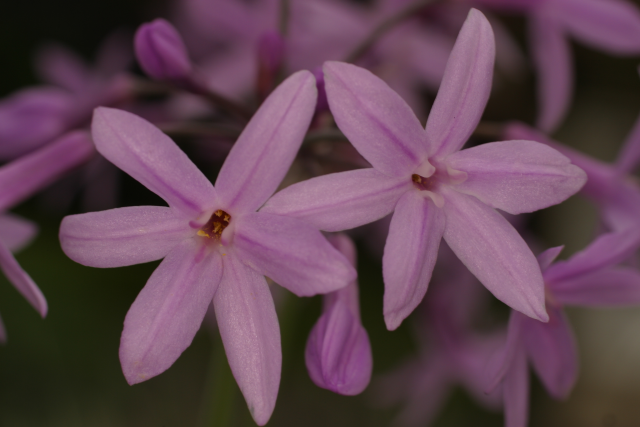
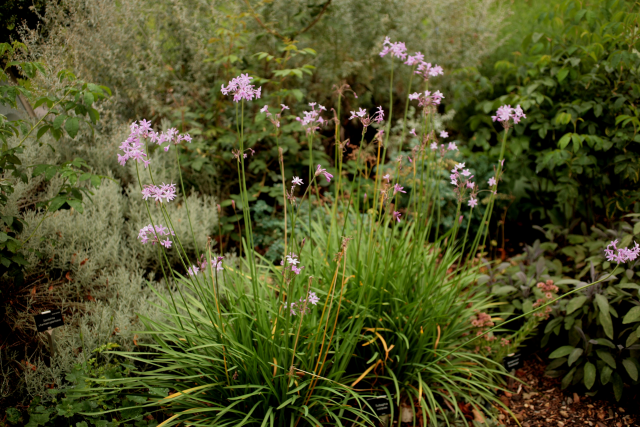
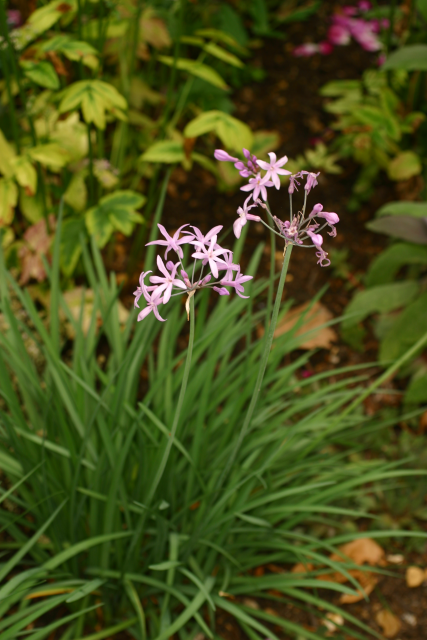
A vigorous, clump-forming perennial 45-60cm (18-24 inch) high by 25cm (10 inch) wide. It has corm-like rhizomes and narrow linear, grey-green leaves, to 30cm (12 in) long. It has large, terminal umbels of fragrant lilac flowers, 2cm long, are produced from mid-summer to early autumn. Tulbaghia grows best in full sun in a light, well-drained, well-aerated sandy loam soil. It tolerates light shade but it may not flower as much. Established plants can survive extended periods of drought. Sow seed in containers in a cold frame as soon as ripe or in spring. Seed germinates easily, and the seedlings quickly reach flowering size. Divide in spring.
Brickell, C. (2003). A-Z Encyclopedia of Garden Plants. Dorling Kindersley. p.1053
Both the leaves and flowers can be used in salads. Chopped leaves are used in sauces and soups. The Zulus use the leaves and flowers as spinach and as a hot, peppery seasoning with meat or potatoes.
Prolonged and excessive consumption of this plant has been associated with a variety of undesirable symptoms, such as abdominal pain, inflammation, sloughing of intestinal tissue as well as cessation of peristalsis.
Violacaea- violet-coloured
Sometimes referred to as Sweet Garlic or Society Garlic as its consumption is not associated with bad breath. This is false.
Family changed from Alliaceae to Amaryllidaceae.
Plants of the World online, Kew Science http://plantsoftheworldonline.org/taxon/urn:lsid:ipni.org:names:542801-1 Link
An African herb used historically to treat some infectious diseases, which is due to its anti-microbial potential. Van Wyck writes that it is used in the traditions of 'muthi' medicine for fever and colds, asthma and tuberculosis. The fresh bulbs are boiled in water and the decoction taken orally or as an anema. The leaves were used to treat cancer of the oesophagus, but the evidence fo this being effective is entirely lacking, although extracts inhibit the growth of cancer cells in laboratory conditions.
Oakeley, Dr. Henry. (2011). A Year in the Medicinal Garden of the Royal College of Physicians, revised edition. Royal College of Physicians, London. p.103 Link
Africa, Southern Africa, KwaZulu-Natal
Africa, Southern Africa, Cape Provinces
.JPG)
.JPG)


