
 Back to List
Asian species of Justicia are noted to be toxic and contain cytotoxic compounds which inhibit virus replication (Wiart, 2006).
Oakeley, Dr. Henry F. (2013). Wellcome Library notes. Link
Possibly toxic but little information
Professor Anthony Dayan, 2022
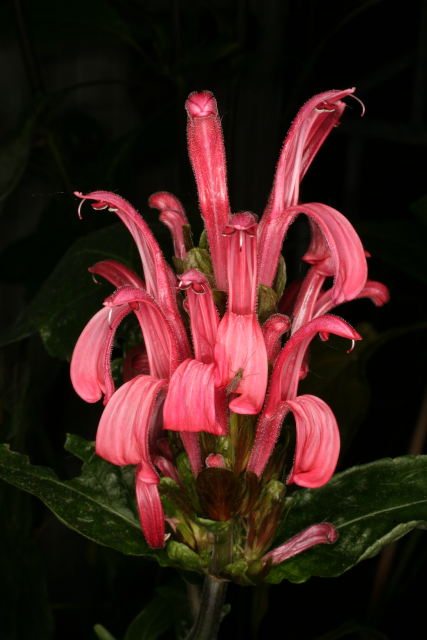
Brazilian Plume flower, Flamingo flower, Shrimp plant.
Named for James Justice (1698-1763) celebrated Scottish 18th century horticulturist. FRS 1730. Principal Clerk to the Court of Sessions. Tulip maniac. Spent his fortune on gardening on his estates in Crichton, Midlothian, and Justicehall, Berwickshire. First person to fruit pineapples in Scotland.
Desmond, Ray. (1977). Dictionary of British and Irish Botanists and Horticulturists. Taylor and Francis, London. p.352
Related to Justicia adhatoda, the Malabar nut tree, adulsa, adhatoda, vasa, or vasaka, a medicinal plant native to Asia, widely used in Siddha Medicine, Ayurvedic and Unani systems of medicine. Traditionally used for respiratory complaints – cough, asthma, bronchitis, TB (leaves, roots & flowers). Juice from the leaves has been used for diarrhoea/dysentery, malaria, and to speed childbirth. Contains active alkaloids including VASICINE and VASICINONE which have been shown to have antibacterial, bronchodilator, respiratory stimulant, and uterotonic activities. A semisynthetic derivative of vasicine, bromhexine; and one of its metabolites, ambroxol; have mucolytic and expectoran proerties and have been marketed for years in e.g. Germany & Switzerland for bronchitis (Boehringer Ingelheim; ‘Bisolvon’, ‘Mucosolvan’). We showed that both have antimycobacterial properties in vitro (Grange J, Snell N. J Ethnopharmacology 1996; 50: 49-53)
Not Known (NS)
Southern America, Brazil
Southern America, Southern South America, Argentina Northeast
Southern America, Southern South America, Paraguay
.JPG)


