 Back to List
Active principle: all parts: protoveratrine A and B, germerine, cyclopamine (if same as Veratrum album)
Wink, M. (2009). Mode of Action and toxicology of plant toxins and poisonous plants. Mitt. Julius Kuhn-Inst. 421:93-111. page 98
Class 1a: Extremely hazardous: alkaloids activate Na+-channels, cyclopamine causes malformation (cyclopian eye), hallucinogenic, heart and neurotoxin, death by respiratory and cardiac arrest, skin irritant
Wink, M. (2009). Mode of Action and toxicology of plant toxins and poisonous plants. Mitt. Julius Kuhn-Inst. 421:93-111. page98
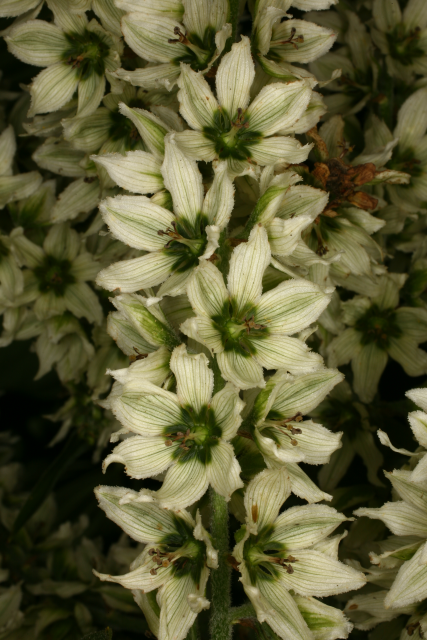
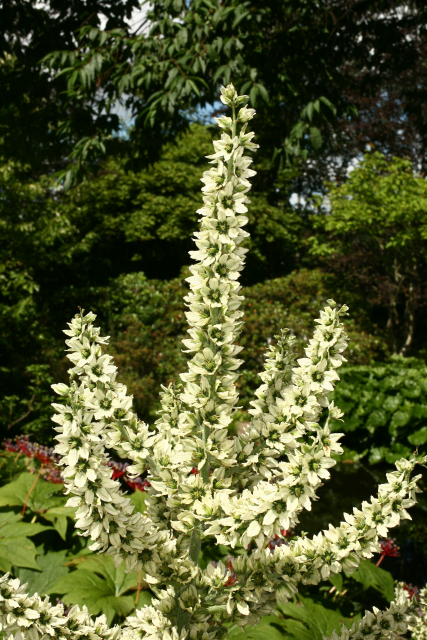
Veratrum californicum L. Melanthiaceae . A further use of Veratrum species came to light when it was noted that V. californicum -and other species - if eaten by sheep resulted in foetal malformations, in particular only having one eye. The chemical in the plant that was responsible, cyclopamine, was found to act on certain genetic pathways responsible for stem cell division in the regulation of the development of bilateral symmetry in the embryo/foetus. Synthetic analogues have been developed which act on what have come to be called the 'hedgehog signalling pathways' in stem cell division, and these 'Hedgehog inhibitors' are being introduced into medicine for the treatment of various cancers like chondrosarcoma, myelofibrosis, and advanced basal cell carcinoma. The drugs are saridegib, erismodegib and vismodegib.
Oakeley, Dr. Henry F. (2013). Wellcome Library notes. Link
POM esmatogrib
Northern America, South-Central U.S.A.
Northern America, Southwestern U.S.A.
Northern America, Northwestern U.S.A.
.JPG)
.JPG)
.JPG)


