 Back to List
Herbalists recommend a tea made from the roots as purgative and from the whole plant as a diuretic. It was known as Masterwort and Magistrantia, implying it was only fit for use by experienced herbalists.
Oakeley, Dr. H. F. . (2013). The Gardens of the Pharmacopoeia Londinensis. Link
Woodville notes that in some diseases, such as hysteria, hydrops, colic, paralysis, intestinal parasites and intermittent fevers, it was ‘employed with so much success as to be distinguished by the name of ‘divinum remedium’ [=divine remedy], and notes that it was no longer so regarded. It contains saponins that have antifungal activity when applied topically.
Woodville, W. (1790). Medical Botany.
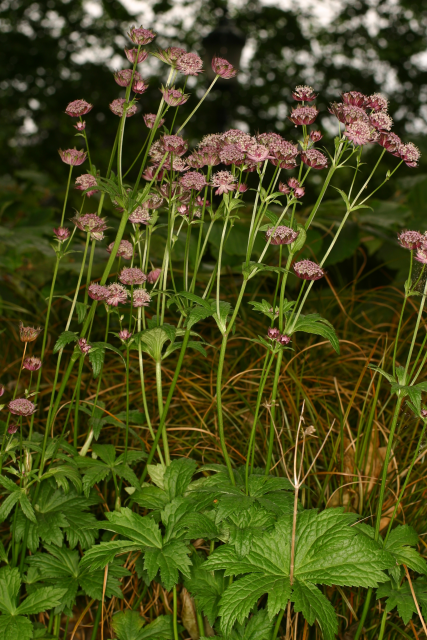
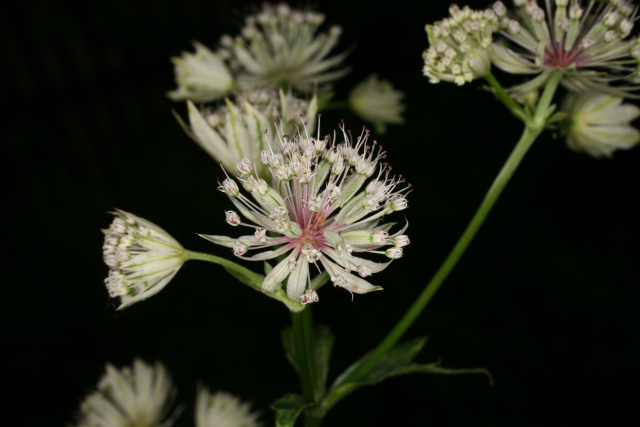
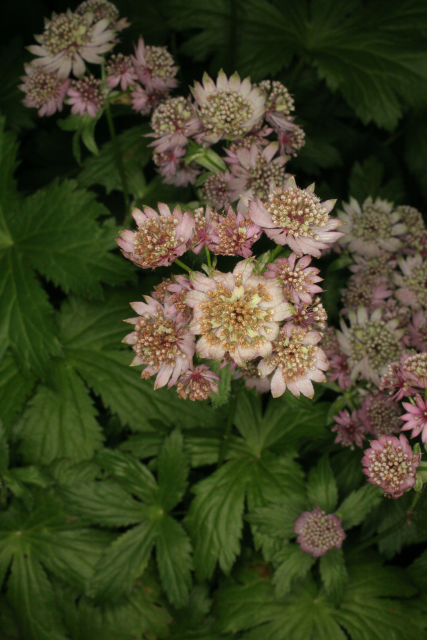
Notes re Lindley's 'Flora Medica' 1838: Astrantia major This is (or was) known as Great Masterwort, Black Masterwort, Gentleman's Melancholy, Hattie's Pincushion, Mountain Sanicle, and Black-root Sanicle. We grow this in the European beds, at the top of the College lawn. It will not be in flower until May/June, but an early one has put up its head, barely visible above the ground at the beginning of April 2007. Lindley listed it as a purgative. It was recommended by Nicholas Culpeper for ‘cold griefs and diseases both of the stomache and body’.
Astrantia major is known as Great Masterwort, but the Masterwort of Culpeper and the Physicians was Common Masterwort - Imperatoria ostruthium L. (now Peucedanum ostruthium (L.) Koch.), known also as Magistrantia. All three are in the Family Apiaceae.
Oakeley, Dr. H. F. . (2013). The Gardens of the Pharmacopoeia Londinensis. Link
Gentleman's melancholy, Hattie's pincushion, Mountain sanicle, Black-root sanicle.It was known as Masterwort and Magistrantia, implying it was only fit for use by experienced herbalists. See note re Peucedanum.
Oakeley, Dr. H. F. . (2013). The Gardens of the Pharmacopoeia Londinensis. Link
Notes by Henry Oakeley from Lindley's 'Flora Medica' (1838): This is (or was) known as Great Masterwort, Black Masterwort, Gentleman's Melancholy, Hattie's Pincushion, Mountain Sanicle, and Black-root Sanicle. We grow this in the European beds, at the top of the College lawn. It will not be in flower until May/June, but an early one has put up its head, barely visible above the ground at the beginning of April 2007. Lindley listed it as a purgative. It was recommended by Nicholas Culpeper (A Physicall Directory (1649)) for ‘cold griefs and diseases both of the stomache and body’.
Lindley, John. (1838). Flora Medica, Longman, Orme, Brown, Green & Longmans
Asia-Temperate, Caucasus
Europe, Eastern Europe, Belarus
Europe, Eastern Europe, Baltic States
Europe, Eastern Europe, Ukraine
Europe, Middle Europe, Austria
Europe, Middle Europe, Germany
Europe, Middle Europe, Hungary
Europe, Middle Europe, Poland
Europe, Middle Europe, Slovakia
Europe, Middle Europe, Switzerland
Europe, Southeastern Europe, Albania
Europe, Southeastern Europe, Bosnia and Herzegovina
Europe, Southeastern Europe, Bulgaria
Europe, Southeastern Europe, Italy
Europe, Southeastern Europe, Romania
Europe, Southeastern Europe, Yugoslavia
Europe, Southwestern Europe, France
Europe, Southwestern Europe, Spain