
 Back to List
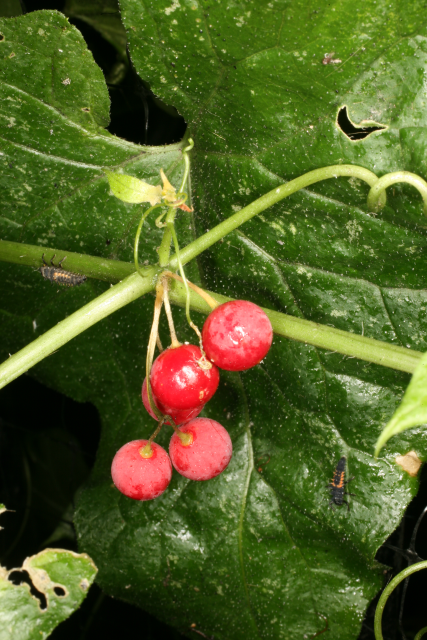
Highly poisonous roots and berries, containing the glycoside bryonidin and the resin bryoresin. The poisonous compounds are known as cucurbitacins.
Oakeley, Dr. H. F. . (2013). The Gardens of the Pharmacopoeia Londinensis. Link
Toxicity due to bryonin alkaloid.
Professor Anthony Dayan, 2021
Culpeper: ‘Of briony, both white and black ... purge phlegm and watery humours, but they trouble the stomach much, they are very good for dropsies; the white is most in use and is admirable good for the fits of the Mother; both of them externally used take away freckles, Sunburning and Morphew [= ‘a scurfy eruption’] from the face, and cleanse filthy ulcers; it is but a churlish purge, but being let alone can do no harm.’
Culpeper, Nicholas. (1650). A Physical Directory . London, Peter Cole.
This plant, sometimes known as the English mandrake, had a history of being passed off as Mandragora. Maud Grieve, in her Modern Herbal (1931), quotes Thomas Green’s assertion from 1832 that imposters would fix human-shaped moulds around the growing bryony roots, producing their very own ‘mandrakes’ for sale to the unsuspecting public. (Grieve, M., (1931) A Modern Herbal, Reprint 1971, Dover Publications, New York)
https://www.herbalhistory.org/home/the-apostle-of-mandrake-botanical-ingredients-in-a-victorian-patent-medicine/
Previously grown as Bryonia dioica
http://www.plantsoftheworldonline.org/
Africa, Northern Africa, Algeria
Africa, Northern Africa, Morocco
Africa, Northern Africa, Tunisia
Europe, Northern Europe, Great Britain
Europe, Northern Europe
Europe, Southeastern Europe
Europe, Southwestern Europe
.JPG)
.JPG)


