
 Back to List
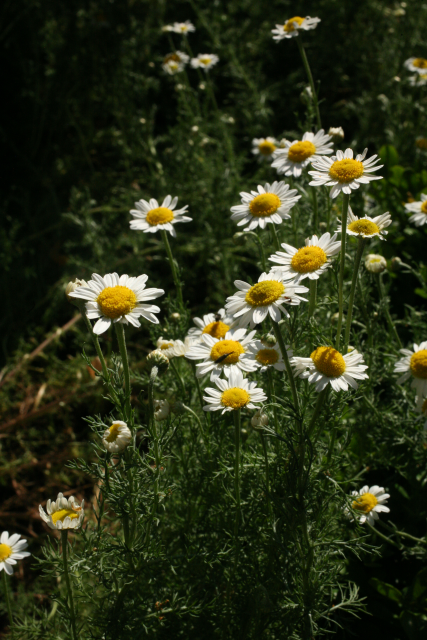
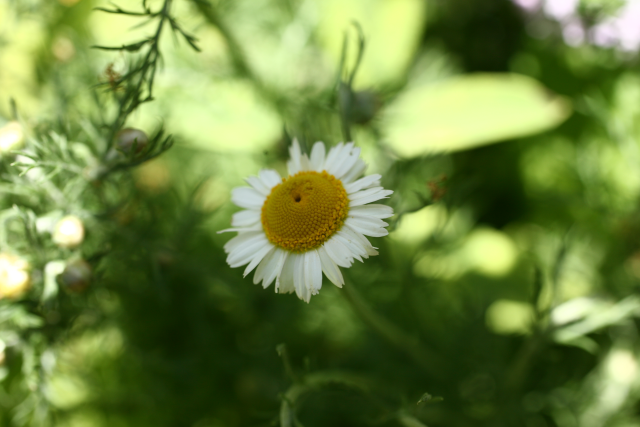
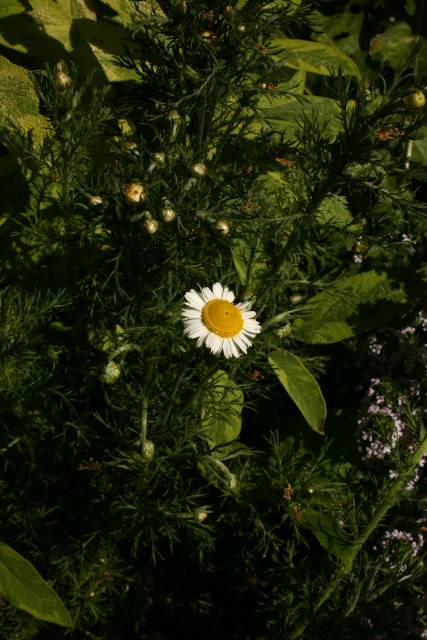
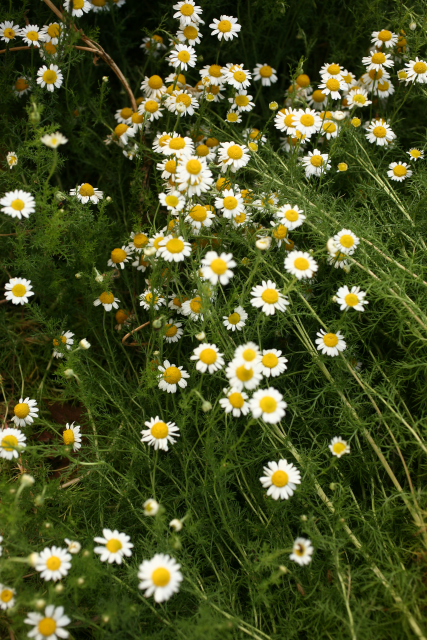
Chamaemelum nobile (L.) All. Asteraceae. English, Roman or garden chamomile Distribution: Europe, Mediterranean. Culpeper (1650): “... assuage swellings, inflammations of the bowels, dissolve wind, are profitable given in clysters or drink, to such as are troubled with colic or [renal] stone.” The leaves are pleasantly fragrant, hence its use as a lawn plant, but also in aromatherapy. A ‘tea’ made from the flowers is apparently used to lighten hair colour. Chamomile contains sesquiterpene lactones, and these are known to possess allergenic properties. Hypersensitivity reactions have been reported in this and other members of the Compositae (Asteraceae) and cross sensitivity reactions may occur (Medicines Control Agency, 2002). Analgesic, and used for cramps and spasms (Quincy, 1718). Chamomile tea is used to help sleep, but may cause uterine contractions so avoid in pregnancy (US National Institutes of Health advice).
Oakeley, Dr. Henry F. (2013). Wellcome Library notes. Link
OTHER COMMON NAMES: COMMON CHAMOMILE; CORN CHAMOMILE; DOG'S CHAMOMILE; GERMAN CHAMOMILE; GROUND APPLE; LAWN CHAMOMILE; PELLITORY OF SPAIN; ROMAN CHAMOMILE; ST ANNE'S FLOWER; SCOTCH CHAMOMILE; SWEET CHAMOMILE; WILD CHAMOMILE.
The Royal Horticultural Society Horticultural Database, available at www.rhs.org.uk
Chamomile contains sesquiterpene lactones.
Oakeley, Dr. H. F. . (2013). The Gardens of the Pharmacopoeia Londinensis. Link
Chamomile contains sesquiterpene lactones and these are known to possess allergenic properties. Hypersensitivity reactions have been reported in this and other members of the Compositae (Asteraceae) and cross sensitivity reactions may occur (MCA, 2002).
Medicines and Health Care Regulatory Agency , MCA. (2002). Medicines and Health Care Regulatory Agency (MHRA) for restricted or prohibited herbal medicines. Medicines and Health Care Regulatory Agency . Link
Traditional Herbal Medicine Registration (THMR).
Culpeper (1649) “... assuage swellings, inflammations of the bowels, dissolve wind, are profitable given in clysters or drink, to such as are troubled with colic or [renal] stone.” It remains widely advertised as an aid to gastroenterological symptoms and, as a topical preparation, is recommended for a variety of skin conditions. There is minimal evidence to support the claims of efficacy and given the self limiting nature of these disorders large scale randomised trials will be required to prove efficacy.
Culpeper, Nicholas. (1650). A Physical Directory . London, Peter Cole.
Africa, Macaronesia, Azores
Africa, Northern Africa, Algeria
Africa, Northern Africa, Morocco
Europe, Northern Europe, Ireland
Europe, Northern Europe, Great Britain
Europe, Southwestern Europe, France
Europe, Southwestern Europe, Portugal
Europe, Southwestern Europe, Spain
.JPG)
.JPG)
.JPG)


