 Back to List
Contains the resin elaterin, a powerful purgative; its sale is restricted in the UK to registered pharmacies.
Oakeley, Dr. H. F. . (2013). The Gardens of the Pharmacopoeia Londinensis. Link
Poison.
Germplasm Resources Information Network (GRIN) at www.ars-grin.gov/cgi-bin/npgs/html/tax_search.pl
Toxicity due to cucurbitacins.
Professor Anthony Dayan, 2021
The plant, especially its fruit, is poisonous (Raikhlin et al., 2000; Vlachos et al., 1994; Eken et al., 2008), containing cucurbitacin, a poisonous triterpene (Attard and Scicluna-Spiteri, 2003
The Journal of Ethnobiology and Traditional Medicine. Photon 119 (2013) 515-537 https://sites.google.com/site/photonfoundationorganization/home/the-journal-of-ethnobiology-and-traditional-medicine
Toxic due to presence of triterpene derivatives that are mucosal irritants and cause violent purgation.
Professor Anthony Dayan, 2022
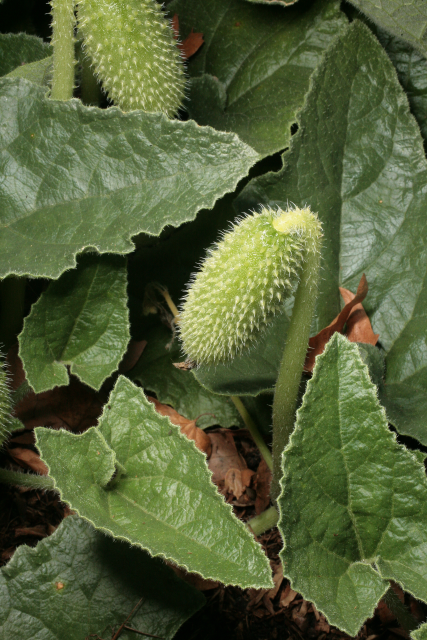
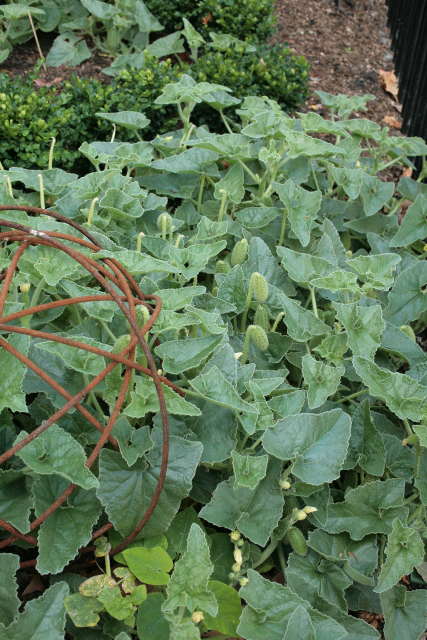
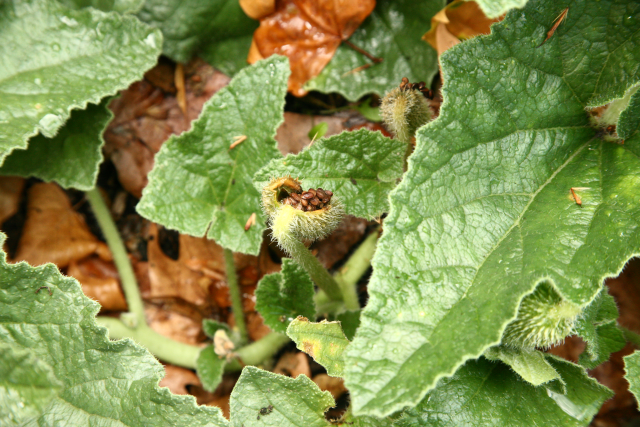
Ecballium elaterium (L.)A.Rich. Benincaseae Squirting cucumber - when ripe, the seed explodes from its case, squirting some distance. Distribution: Asia, Europe and N. Africa. Contain cucurbitacins which are very bitter, cytotoxic and poisonous. A restricted herbal product, only to be supplied in registered pharmacies or under the supervision of a pharmacist (UK Medicines and Healthcare Products Regulatory Agency (MHRA)).
Oakeley, Dr. Henry F. (2013). Wellcome Library notes. Link
Culpeper: ‘Cucumers, or (if you will) cowcumbers, cool the stomach and are good against ulcers in the bladder.’
This plant has at least 292 folk and popular names in European and Middle Eastern languages. They reflect its unusual appearance, the peculiar method of seed dispersal, medicinal uses, role in magic and witchcraft and bitter taste. In some countries they also represent terms of abuse often by reference to ‘lowly animals’ and disgusting habits. The large number of names shows the influence of cultural and societal factors in the formation of popular names and exemplify the problems of identification faced by ethnobotanists and historians in identifying particular species from past records.
The Journal of Ethnobiology and Traditional Medicine. Photon 119 (2013) 515-537 https://sites.google.com/site/photonfoundationorganization/home/the-journal-of-ethnobiology-and-traditional-medicine
Cancer; Cathartic; Dropsy; Nephritis; Purgative. Restricted.
Germplasm Resources Information Network (GRIN) at www.ars-grin.gov/cgi-bin/npgs/html/tax_search.pl
Culpeper: ‘Cucumers, or (if you will) cowcumbers, cool the stomach and are good against ulcers in the bladder.’
Culpeper, Nicholas. (1650). A Physical Directory . London, Peter Cole.
The cucumber of today’s salads is Cucumis sativus.
Restricted medicinal.
The medicinal properties and uses of EE have been well known since the Assyrian Times (Campbell, 1949). Several sources have indicated that the fruit of E. elaterium is the source of the important medical product«_____ __» (elaterion), "Elatir", including: Dioscorides (Materia Medica 4:150 as Sikysagrios – ____ __ __; Gunther, 1959); Theophrastus (Historia Plantarum: II: 476 asSikyos o agrios – _____ _ __ __); Galenus Med. (De simplicium medicamentorum temperamentis ac facultatibus libri xi as Sikyos agrios - _____ __ __) and Pliny (as "elaterium", Natural History, XX, 3. 85). Its properties and uses include: analgesic, laxative, and abortive; treatment for chronic sinusitis, liver cirrhosis, rheumatism, and hemorrhoids; treatment for jaundice, diuretic, emetic, nasal drops, potent cathartic and anti-inflammatory agent (see Latté, 2009 for a recent review).
The Journal of Ethnobiology and Traditional Medicine. Photon 119 (2013) 515-537 https://sites.google.com/site/photonfoundationorganization/home/the-journal-of-ethnobiology-and-traditional-medicine
Africa, Northern Africa, Algeria
Africa, Northern Africa, Libya
Africa, Northern Africa, Morocco
Africa, Northern Africa, Tunisia
Asia-Temperate, Caucasus, North Caucasus
Asia-Temperate, Caucasus, Transcaucasus
Asia-Temperate, Western Asia, Cyprus
Asia-Temperate, Western Asia, Iran
Asia-Temperate, Western Asia, Iraq
Asia-Temperate, Western Asia, Jordan
Asia-Temperate, Western Asia, Lebanon-Syria
Asia-Temperate, Western Asia, Turkey
Europe, Eastern Europe, Baltic States
Europe, Eastern Europe, Ukraine
Europe, Southeastern Europe, Albania
Europe, Southeastern Europe, Bulgaria
Europe, Southeastern Europe, Greece
Europe, Southeastern Europe, Italy
Europe, Southeastern Europe, Romania
Europe, Southeastern Europe, Yugoslavia
Europe, Southwestern Europe, France
Europe, Southwestern Europe, Portugal
Europe, Southwestern Europe, Spain
.JPG)
.JPG)
.JPG)