 Back to List
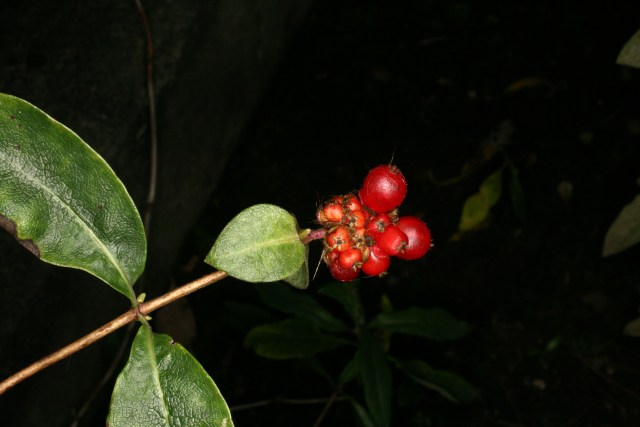
Taken in large doses the berries induce vomiting and are toxic
Culpeper, Nicholas. (1983). Culpeper's Colour Herbal, W. Foulsham & Co. Ltd.. Potterton, David
Notes: Another plant widely used in herbal medicine, but reported poisonous in large amounts. The fruits make one vomit, but otherwise the plant seems mostly recommended for treating ‘nervous asthma’ (not explained) in herbal medicine.
Oakeley, Dr. H. F. . (2013). The Gardens of the Pharmacopoeia Londinensis. Link
(Frohne, 2004) reports that honeysuckles are poisonous and that the berries cause vomiting and the leaves purgation – a sure sign of toxicity.
Oakeley, Dr. Henry F. (2013). Wellcome Library notes. Link
The dried berries of the honeysuckle, marinated in wine were recommended ‘to abate fatigue’ Dioscorides’ Materia Medica (circa 80 CE)
DeSwiet, Michael. (2012). Plants and the Olympic Games. Link
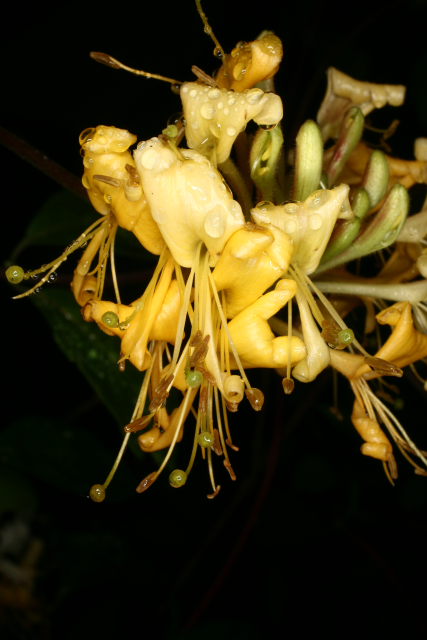
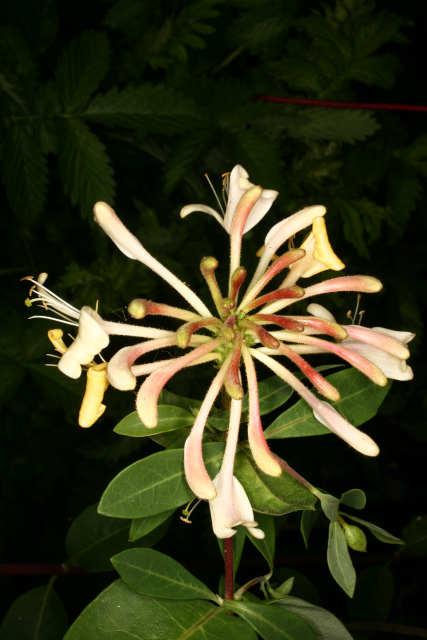
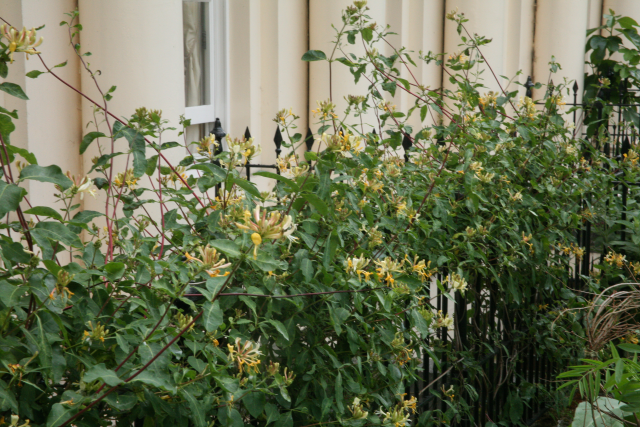
Lonicera periclymenum L. Caprifoliaceae. Honeysuckle Distribution: Europe. This shrubby, fragrant, white-flowered honeysuckle is named for Adam Lonitzer (Lonicerus) (1528–86). German botanist, physician and author of Naturalis historiae opus novum (1551, 1555) and the Kreuterbuch (1557); professor of mathematics at the University of Marburg (Oakeley, 2012). Gerard (1633), using the name Periclymenum, woodbinde or honisuckles, says that the flowers stop ‘pissing of blood’ and can be used for soreness of the throat and ‘the secret parts’. Modern literature (Frohne, 2004) reports that honeysuckles are poisonous and that the berries cause vomiting and the leaves purgation – a sure sign of toxicity. Sucking the nectar from the flowers appears acceptable, but toxicity if any is unknown.
Oakeley, Dr. Henry. (2012). Doctors in the Medicinal Garden. Plants named after physicians. Royal College of Physicians. Link
Culpeper: ‘Caprifolium. Honeysuckles. ... If you chew but a leaf of it in your mouth, experience will tell you, that it is likelier to cause than to cure a sore throat, they provoke urine and purge by urine, bring speedy delivery to women in travail [=labour] yet procure barrenness and hinder conception; outwardly they dry up foul ulcers and cleanse the face from morphew [=scurfy eruptions], sunburning and freckles.
Culpeper, Nicholas. (1650). A Physical Directory . London, Peter Cole.
This shrubby, fragrant, white-flowered honeysuckle is named for Adam Lonitzer (Lonicerus) (1528–86). A German botanist, physician and author of the botanical herbal Naturalis historiae opus novum (vol 1 in 1551, vol 2 in 1555) and its German translation, the Kreuterbuch (1557) (sourced mainly from earlier herbals), he became professor of mathematics at the University of Marburg in 1553 and doctor of medicine in 1554, working in Frankfurt-am-Main. His wife was the daughter of the Frankfurt publisher, Christian Egenolff, who published his book along with other herbals. Adam’s father, Johann Lonitzer (Joanne Lonicerus) (1499–1569), was professor of theology and ancient languages and contributed the Greek, Hebrew, Latin and German names of plants to Ruellio’s commentary on Dioscorides (edition of 1543) published by Egenolff.
Oakeley, Dr. Henry. (2012). Doctors in the Medicinal Garden. Plants named after physicians. Royal College of Physicians. Link
Africa, Northern Africa, Morocco
Europe, Southeastern Europe, Albania
Europe, Southeastern Europe, Yugoslavia
Europe, Southeastern Europe, Greece
Europe, Southeastern Europe, Italy
Europe, Southwestern Europe, France
Europe, Southwestern Europe, Portugal
Europe, Southwestern Europe, Spain
.jpg)