 Back to List
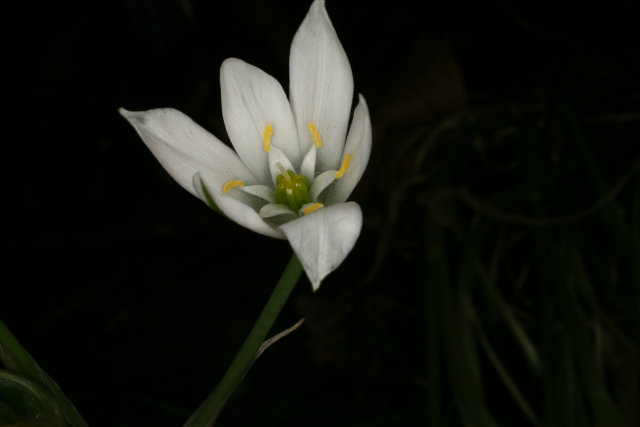
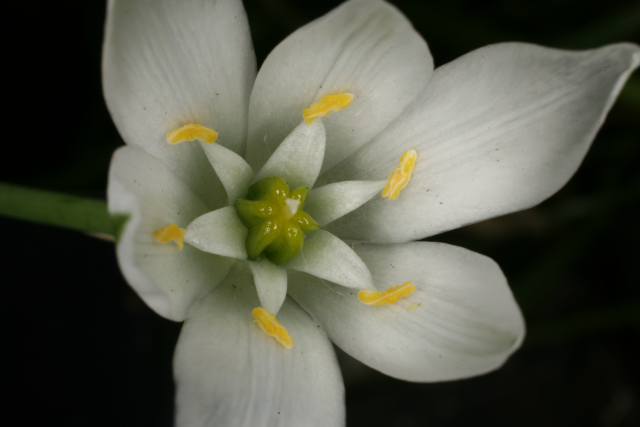
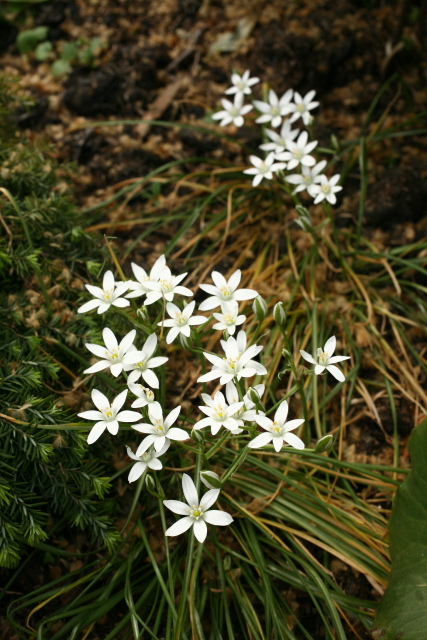
Ornithogalum umbellatum L. Hyacinthaceae, Star of Bethlehem, Grass lily. Distribution: Central Europe, SW Asia, NW Africa. All parts are poisonous, especially the bulbs. The toxin is a cardiac glycoside with effects similar to digoxin, vomiting, cardiac irregularities and death in humans and livestock. Only used for decoration by Native Americans (it is a non-native plant that has escaped into the wild from cultivation) and called Sleepydick (Moerman, 1998). One of its toxins is Convallotoxin, also present in Lily of the Valley, Convallaria majalis.
Oakeley, Dr. Henry F. (2013). Wellcome Library notes. Link
Toxic due to cardiac glycosides.
Professor Anthony Dayan, 2022
Africa, Northern Africa, Algeria
Africa, Northern Africa, Morocco
Asia-Temperate, Western Asia, Cyprus
Asia-Temperate, Western Asia, Turkey
Europe, Middle Europe, Austria
Europe, Middle Europe, Belgium
Europe, Southwestern Europe, Spain
Europe, Southeastern Europe, Yugoslavia
Europe, Southeastern Europe, Greece
Europe, Southeastern Europe, Italy
Europe, Southeastern Europe, Romania
Europe, Southwestern Europe, Portugal
Europe, Southwestern Europe, France
Europe, Middle Europe, Hungary
Europe, Middle Europe, Netherlands
Europe, Middle Europe, Switzerland
Europe, Eastern Europe, Ukraine
Europe, Southeastern Europe, Albania
Europe, Southeastern Europe, Bulgaria