 Back to List
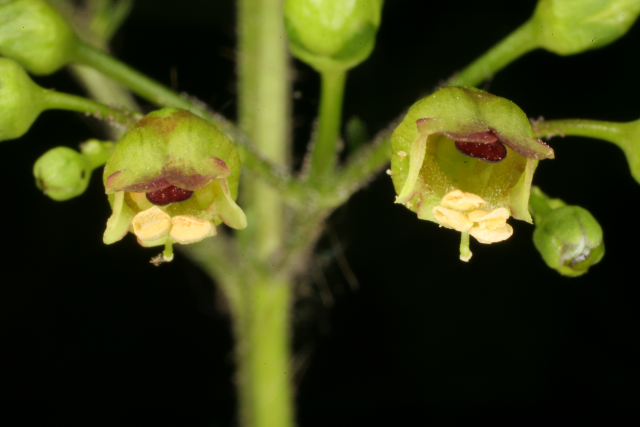
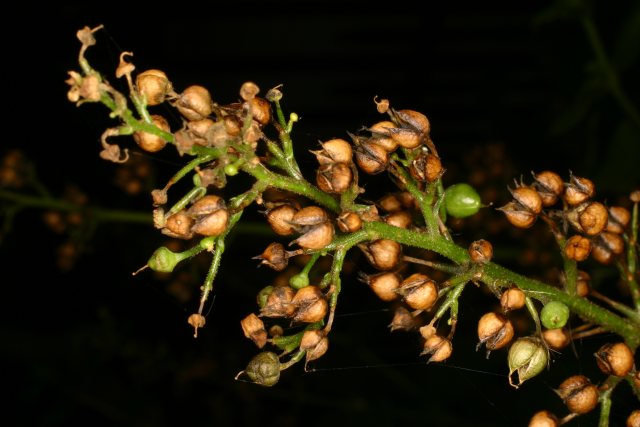
Culpeper: ‘Scrophularia. Figwort. So called of Scrophula, the King’s Evil, which it cures, they say, by being only hung about the neck, if not bruise it, and apply it to the place, it helps the Piles or Haemorrhoids, and (they say) being hung about the neck preserves the body in health.’
Culpeper, Nicholas. (1650). A Physical Directory . London, Peter Cole.
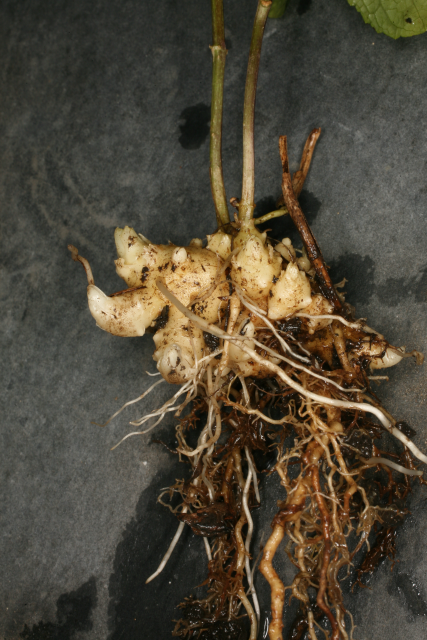
Notes: Fig is an ancient word for piles, so figwort means ‘pile plant’. Linnaeus gave it its Latin name in 1753, and added 'nodosa' which may refer to the nodular roots. The King’s Evil, or scrofula, was the name for a tuberculous infection of the lymph nodes in the neck, which was supposed to be cured by the touch of a King. The lymph nodes produced nodular swellings, hence the belief that the roots could cure them. By the time Lindley wrote (1838), it was only used to treat ‘scab’ in swine and ‘said to be pugative and emetic’. The leaves and roots have a bitter taste.
Oakeley, Dr. H. F. . (2013). The Gardens of the Pharmacopoeia Londinensis. Link
OTHER COMMON NAMES: CARPENTER'S SQUARE; GREAT PILEWORT; KERNEL WORT; KNOTTED FIGWORT; MURRAIN GRASS
The Royal Horticultural Society Horticultural Database, available at www.rhs.org.uk
Asia-Temperate, Caucasus
Asia-Temperate, Russian Far East
Asia-Temperate, Siberia
Asia-Temperate, Western Asia, Turkey
Europe, Eastern Europe
Europe, Middle Europe
Europe, Northern Europe
Europe, Northern Europe, Great Britain
Europe, Southeastern Europe
Europe, Southwestern Europe