 Back to List
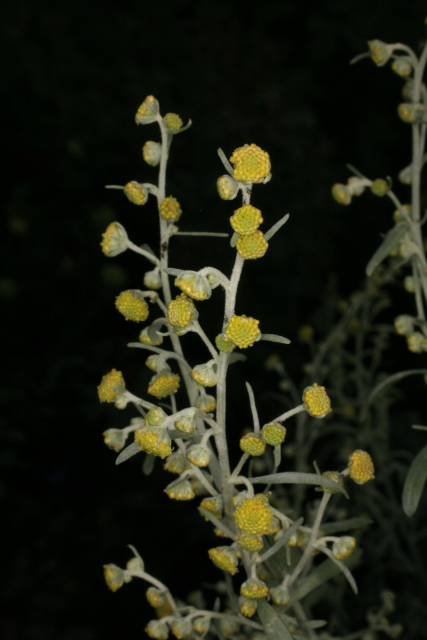
Ingredient of absinthe, favoured by C19th artists incl. Vincent van Gogh
Wink, Michael & Ben-Erik van Wyk (2008). Mind-Altering and Poisonous Plants of the World. Timber Press
– Common absinthe, Old Man, Lad’s Love, Wormwood
Oakeley, Dr. H. F. . (2013). The Gardens of the Pharmacopoeia Londinensis. Link
Culpeper: ‘... help weakness of the stomach, clense Choller, kill worms, open Stoppings, help surfets, cleer the sight, resist poisons, clense the blood and secure cloaths from moths.’
Culpeper, Nicholas. (1650). A Physical Directory . London, Peter Cole.
Notes: Used in the manufacture of the liqueur, absinthe, but it is said to be toxic – causing brain damage - and its use has been banned in many countries. Whether the hallucinations and brain damage of heavy absinthe drinkers are any different from those of all other alcoholics is still contested. The oil was used as a moth and insect repellent. It contains santonin, previously used as a vermifuge before less toxic treatments were known. It has been used as an abortifacient and a contraceptive, but its main use in Roman times – and in present day Pompei – is for colitis.
Oakeley, Dr. H. F. . (2013). The Gardens of the Pharmacopoeia Londinensis. Link
Artemisia: after the Greek goddess Artemis who so benefitted from a plant of this family that she gave it her own name. This was also the old Latin name given to the mugwort or wormwoods. An alternative possibility for the derivation of this name is that it comes from Queen Artemisia of Halicarnassus in Asia Minor (Turkey), sister and wife of King Mausolus, who ruled after his death from 352 to 350 B.C.E. and built during her short reign one of the Seven Wonders of the Ancient World, the Mausoleum at Halicarnassus, which she unfortunately did not live to see the completion of. This is one of the many genera which Swedish botanist Carl Linnaeus published in his Species Plantarum in 1753 and is in the family Asteraceae
http://www.calflora.net/southafrica/1A-B.html
Contains thujone, which means the plant is toxic if ingested in large amounts.
Professor Anthony Dayan, 2021
Africa, Northern Africa, Algeria
Africa, Northern Africa, Morocco
Asia-Temperate, Western Asia, Afghanistan
Asia-Temperate, Western Asia, Iran
Asia-Temperate, Western Asia, Turkey
Europe, Eastern Europe, Baltic States
Europe, Southwestern Europe, France
Europe, Southwestern Europe, Portugal
Europe, Southwestern Europe, Spain
Europe, Southeastern Europe, Albania
Europe, Southeastern Europe, Yugoslavia
Europe, Southeastern Europe, Greece
Europe, Southeastern Europe, Italy
Europe, Southeastern Europe, Bulgaria
Europe, Eastern Europe, Baltic States
Europe, Middle Europe, Switzerland
Europe, Eastern Europe, Belarus
Europe, Eastern Europe, Baltic States
Europe, Eastern Europe, Ukraine
Europe, Eastern Europe, Central European Russia
Europe, Eastern Europe, East European Russia
Europe, Northern Europe, Great Britain
Europe, Middle Europe, Austria
Europe, Middle Europe, Germany
Europe, Middle Europe, Netherlands
Europe, Middle Europe, Belgium
Europe, Middle Europe, Poland
Asia-Tropical, Indian Subcontinent, India
Europe, Northern Europe, Denmark
Europe, Northern Europe, Finland
Europe, Northern Europe, Ireland
Europe, Northern Europe, Norway
Europe, Northern Europe, Sweden
Northern America, Southeastern U.S.A., Georgia
Asia-Temperate, Siberia
Asia-Temperate, Middle Asia, Kazakhstan
Asia-Temperate, Middle Asia, Kyrgyzstan
Asia-Temperate, Middle Asia, Tadzhikistan
Asia-Temperate, Middle Asia, Turkmenistan
 (15).jpg)