 Back to List
Topoisomerase inhibitors Contain podophyllotoxin for treating genital warts. Synthesised to etoposide for testicular and lung cancers, and acute leukaemias; teniposide for leukaemias and Hodgkin’s lymphoma.
Oakeley, Dr. H.F. (2013). Medicines from RCP plants label list 5-2013.docx.
POM – podophylotoxin, etoposide, teniposide
There is a video by Dr Henry Oakeley
Videos from the garden Link
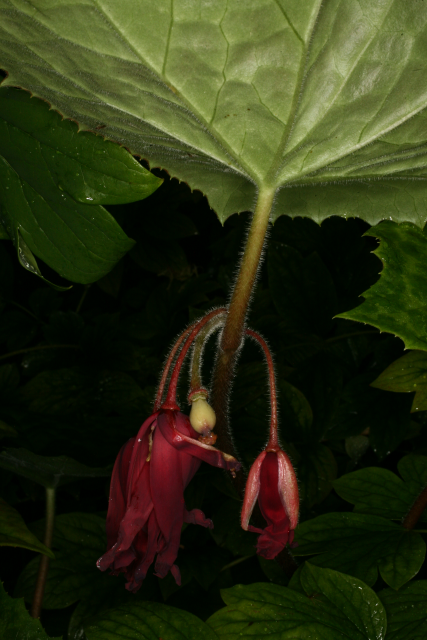
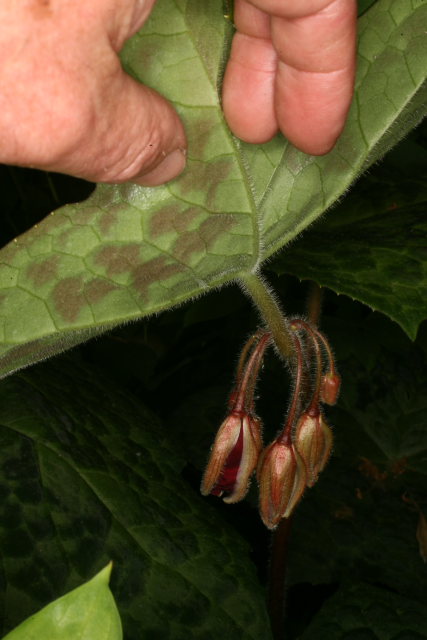
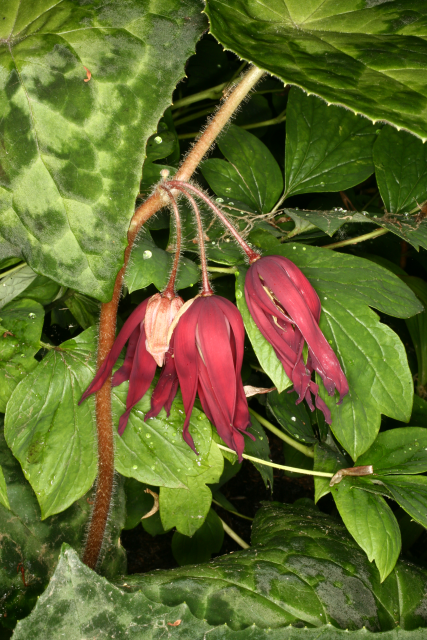
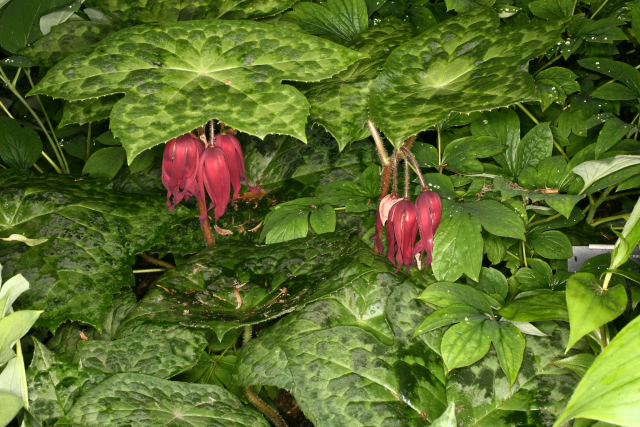
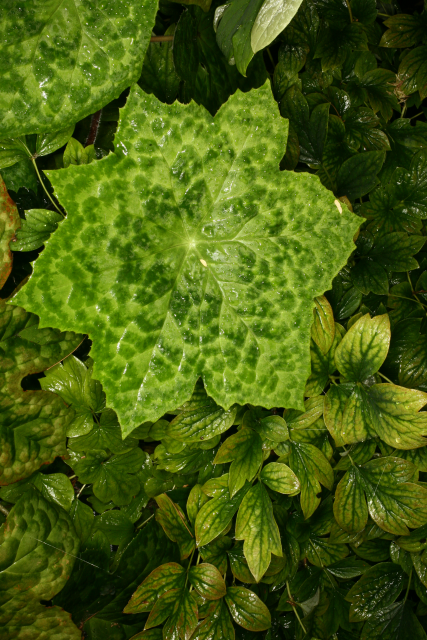
Rec'd incorrectly identified as P. hexandrum var chinense (which has serrated leaf margins and different variegation to 'Spotty Dottty'). It was raised by Dan Heims of Terra Nova Nurseries inc. in the USA. Their website says: "This brilliant hybrid of several Asian Mayapples [=Podophyllum species] boasts large, vigorous, lobed umbrella-like leaves. New leaves are chartreuse with dramatic chocolate-brown spotting. In summer, the leaves are green with lightly spotted areas. Large [tubular] garnet red flowers [P. hexandrum has pink flowers above the leaves] are found under the leaves in clusters of 5 or more. 'Spotty Dotty' was selected for its coloring, frost tolerance, vigor, and rhizomatous habit. All Podophyllum prefer shade and cool, moist, organic soils. Protect from hard frosts in spring. Avoid drought stress." P. versipelle has Lilium martagon-like pendulous red flowers and no leaf variegation. P. emodi has white flowers above the leaves. Several growers regard it as a hybrid between P. delavayi and P. difforme.
http://www.terranovanurseries.com/growers/podophyllumspottydotty-p-184.html
Sap is highly toxic and can be absorbed through the skin and will induce vomiting with future sensitisation as a consequence. Eaten by Native Americans to commit suicide.[HO]
Highly toxic if ingested or the skin is contaminated causing severe vomiting and brain damage. It is genotoxic.
Professor Anthony Dayan, 2022
"Humans/Pets: Harmful if eaten"- HTA guidelines
HTA Guide to Potentially Harmful Plants, 3rd Edition (2022)
.JPG)
.JPG)


